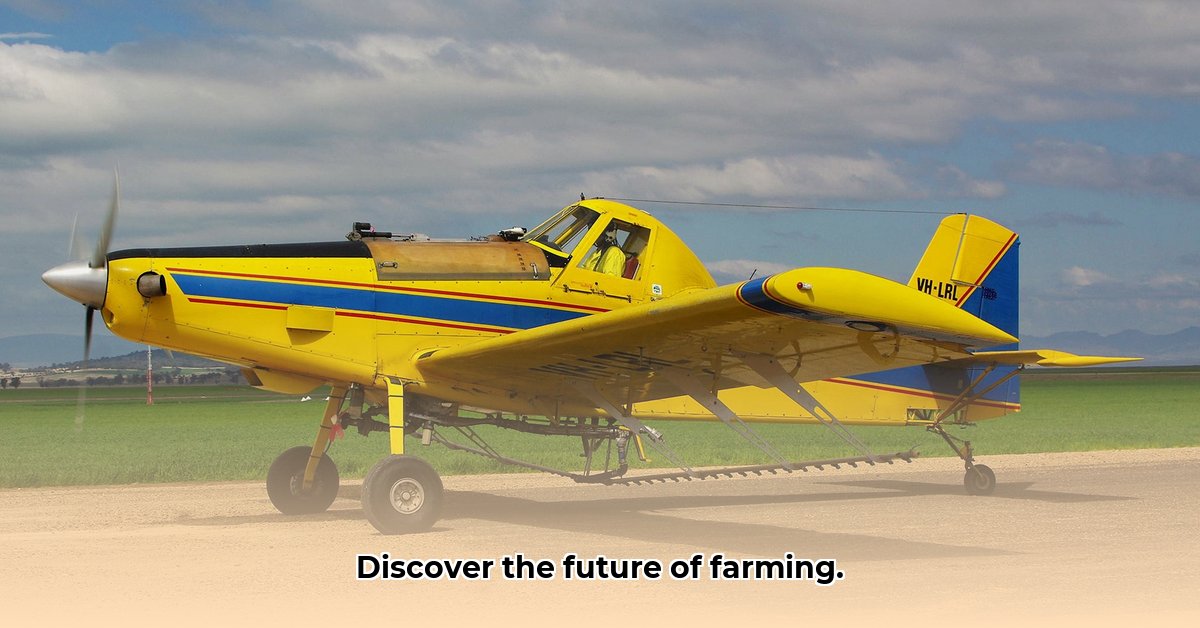
The Air Tractor AT-502B, a stalwart of large-scale agriculture since its introduction in 1987, faces a pivotal moment. With over 1000 units sold, its efficiency is undeniable. However, its substantial fuel consumption and environmental impact raise critical questions about its long-term viability in an increasingly sustainability-conscious world. For more on advanced models, see the AT-602 information. This article examines the AT-502B's position, operational considerations, and future prospects within the context of sustainable agriculture, offering actionable intelligence for farmers, investors, and policymakers.
The AT-502B: A Powerful Tool Needing a Green Upgrade
The AT-502B's 500-gallon tank allows for wide coverage, reducing flight time and fuel waste compared to smaller aircraft. This translates to increased efficiency and profitability for farmers. However, the inherent fuel consumption and associated greenhouse gas emissions are significant environmental concerns. Addressing these issues is crucial, not only for regulatory compliance but also for the long-term health of our planet and the future of food security. Is the current model truly sustainable, or does it require a fundamental redesign?
Navigating the Competitive Landscape: Drones and Beyond
Agricultural technology is rapidly evolving. Sophisticated drones offer precision spraying capabilities, minimizing chemical use and maximizing efficiency. Ground-based application methods and autonomous tractors also challenge the AT-502B's dominance. How can this established technology remain competitive? Innovation is key. Research into alternative fuels, hybrid models, and potentially even fully electric versions is needed to ensure the AT-502B remains a relevant tool in the modern farming landscape. The question remains: can legacy technology adapt to the pace of recent innovations?
The Total Cost of Ownership: Beyond Initial Investment
While the AT-502B offers high productivity, farmers must consider the complete cost picture. Maintenance, parts, labor, and significant fuel costs constitute a substantial operational budget. Pilot salaries and insurance further add to the expense. A thorough cost-benefit analysis, taking into account all these factors, is crucial before investing in this substantial piece of equipment. Does the return on investment justify the high operational expenses in the long run?
Stakeholder Collaboration: A Path Towards Sustainable Aerial Application
The AT-502B's sustainable future hinges on collaboration between all stakeholders. Minimizing the environmental impact requires a concerted effort.
Stakeholder Actions: Collaborative Steps Toward Sustainability
| Stakeholder | Short-Term Goals (0-1 year) | Long-Term Goals (3-5 years) |
|---|---|---|
| AT-502 Manufacturers | Publish detailed fuel efficiency and emissions data; invest in R&D for emission reduction technologies. | Develop and implement cleaner fuel technologies; explore alternative propulsion (hybrid, electric); pilot programs for advanced emission reduction. |
| Operators | Optimize flight paths; utilize precision application technologies to reduce chemical use. | Implement training on sustainable practices; explore data-driven decision-making; adopt precision agriculture techniques. |
| Regulators | Offer incentives for sustainable aviation practices. | Establish stricter, yet achievable, emission standards; fund research into sustainable fuels and technologies; implement robust monitoring and reporting. |
| Farmers & Consumers | Demand transparent information on the environmental impact of their food choices. | Support sustainable farming practices; actively seek out and purchase sustainably produced goods. |
Risk Assessment: Identifying and Mitigating Challenges
Several factors could hinder the AT-502B's future success. A proactive approach to risk mitigation is essential.
Risk Assessment: Potential Headwinds for AT-502B Adoption
| Risk Factor | Likelihood | Impact | Mitigation Strategy |
|---|---|---|---|
| Rising Fuel Costs | High | High | Explore alternative fuels; optimize flight techniques; improve fuel efficiency through technological advancements. |
| Stricter Regulations | High | High | Invest in cleaner technologies; implement carbon offsetting programs; engage proactively with regulators. |
| Drone Competition | Medium | Medium | Highlight cost-effectiveness for large-scale operations; explore strategic partnerships; focus on areas where drones are less effective. |
| Pilot Shortages | Medium | Medium | Improve pilot training and retention; explore drone technology to supplement human pilots. |
| Shifting Consumer Demand | High | High | Communicate environmental improvements; pursue sustainable certifications; participate in consumer-facing initiatives. |
The Regulatory Landscape: Adapting to Evolving Standards
Government regulations concerning environmental protection are becoming increasingly stringent. Meeting these standards is paramount for the AT-502B's continued operation. Proactive collaboration with regulators and investment in emission-reducing technologies are crucial for long-term compliance and success.
Conclusion: A Sustainable Future for the AT-502B?
The AT-502B's future rests on its ability to adapt to the growing demand for sustainable practices. By addressing environmental concerns, embracing innovation, and prioritizing responsible operation, it can continue to play a crucial role in global food production while minimizing its environmental footprint. The coming years will be decisive, requiring ongoing research, development, and a commitment to a greener future.